
Cypress, Orange County
Car Lockout Service in Cypress
Short answer: Before you call about a car lockout in Cypress, note the year, make and model, where the keys are, and exactly where the car is parked. Keep your photo ID handy, because we compare it with the registration once the door is open. Hours: every day, 6:30 a.m. to 11:30 p.m.
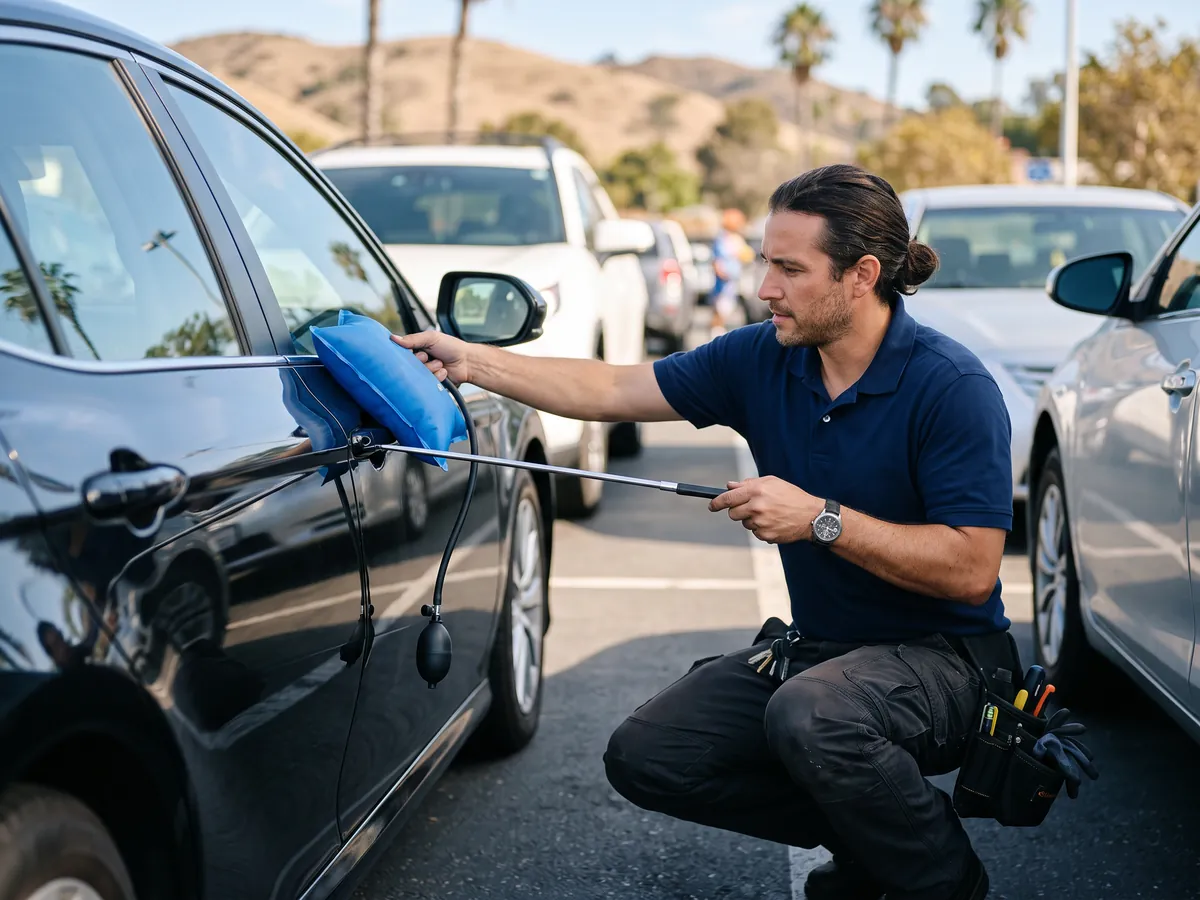
You heard the locks chirp, or you watched them drop with the key fob still sitting in the cupholder. For the first minute, a car lockout in Cypress feels like a crisis; after that it becomes a logistics question: who can reach you, how they'll open the door, and whether the car will look exactly the same afterward. Julian's Locksmith is a licensed mobile locksmith (California license LCO7891) that opens vehicles with inflatable air wedges, coated long-reach rods and keyway-specific Lishi picks, never a slim jim or a pry bar. We'll ask a few quick questions on the phone, quote the job, give you an honest ETA, and check your ID against the registration before handing the car back. Call (951) 903-3193 and tell us what you're driving.
Car lockouts in Cypress cluster where cars sit and people hurry: the Cypress College lots off Valley View Street, the large parking field outside Costco on Katella Avenue, the shopping centers along Lincoln Avenue, and school pickup lines. Arms full of groceries and a door that closes with the fob inside is the classic case. Another is a push-button-start car that locks itself when the fob stays in the trunk. We open most vehicles with an inflatable air wedge and a long-reach tool, so paint, weatherstripping and window seals aren't harmed. For certain locks we decode with a Lishi pick and make a key, which is gentler than any forced method. Keys in the trunk are a separate puzzle, because some cars let us release the trunk from inside and others don't. Summer heat changes the urgency. A closed car on a sunny afternoon in Orange County gets dangerous quickly for a child or animal, and in that case 911 comes first. Otherwise, have your registration or title and photo ID ready, since we confirm the car is yours before we open it.
How this works in Cypress
Keys in the trunk are a puzzle of their own, because most trunks are deliberately hard to reach from the cabin. Our usual path is to open a door first, then work the trunk from inside the car. Depending on the model, that means the release button on the driver's door or dash, the remote release lever on the floor beside the seat, or folding the rear seatbacks to reach through. A few catches trip people up. Many sedans have a valet switch in the glove box that disables the trunk release, some seatbacks only fold from inside the trunk, and plenty of newer cars have no exterior trunk keyhole at all. When nothing else works, we can sometimes reach the glow-in-the-dark emergency handle that U.S. passenger cars with trunks have carried since the early 2000s. SUVs and hatchbacks are usually simpler, since the cargo area opens into the cabin, though a power liftgate still needs electrical power to open. Pickups with camper shells or locking bed covers, and vans with a separate cargo lock, each call for their own approach, which is why we ask exactly where the keys ended up.
How we can help in Cypress
- Air wedge and long-reach entry. Think of it as working inside the car without climbing in. We protect the door edge, inflate a wedge by hand a few millimeters at a time, then guide a long-reach tool by sight to the lock button on the armrest. Slow inflation is the whole trick, because it keeps the frame from springing and the glass from flexing.
- Lishi lock picking and key decoding. When a wedge isn't the right call, we pick the driver's door lock with a Lishi tool made for that exact keyway. It sets each wafer individually and turns the cylinder the way your key would, so the lock keeps working normally afterward. It's our go-to for frameless glass, shielded doors and cars whose interior controls are disabled.
- Keys locked in the trunk. We typically open a door first, then use the car's own trunk release, the floor lever by the driver's seat or a fold-down seatback. If the glove-box valet switch has disabled the release, we switch it back on. Only when the cabin offers no path do we pick the trunk cylinder, on cars that still have one.
- Push-start cars locked with the fob inside. Smart fobs also go unregistered when they're tucked into RFID-blocking wallets, metal sunglasses cases or a pocket beside a phone charger. We'll open the car without damage, then point out where the interior antennas sit and which spots in your cabin, like a deep console bin or a wireless charging pad, tend to hide the key.
- Lockouts with no key at all. If you suspect the keys were stolen rather than lost, tell us. After making a new key, we can usually erase the missing ones from the immobilizer memory so they won't start the engine, though anyone holding the old blade could still open the doors until the cylinders are rekeyed or replaced.
Local factors in Cypress
Long commutes out of Cypress mean early starts, park-and-ride lots and cars left for ten hours at a stretch. Those are prime conditions for a lockout: keys set on the seat while grabbing a lunch bag in the dark, or a battery that gives up after a long day in a sun-baked lot. Our day starts at 6:30 a.m., which lines up with the predawn rush, and we bring wedges and picks to the lot instead of asking you to tow anywhere.
Apartment parking in Cypress comes with tight carports, assigned stalls and gates that need a code or a resident to let our van in. If your car is locked inside a gated complex lot, tell us how we can get through when you call. Carport spaces can be narrow, so we may work from the passenger side, which is no problem with a long-reach tool and a careful wedge.
Students in Cypress often drive older cars, borrowed cars or cars registered to a parent. That's fine for a lockout, but it means the name on the registration won't match your license. Bring your ID and have the owner reachable by phone, or carry an insurance card that lists you as a driver. Campus garages and permit lots have their own access rules, so tell us exactly where you're parked.
Situations this covers
After a Costco run on Katella Avenue, a driver loads the trunk of her newer sedan, closes it and realizes the fob went in with the bags. The doors are locked and the push-button start does nothing without the fob nearby. We verify the registration against her ID, open a door with an air wedge and reach tool, and press the interior trunk release. She drives off with the groceries and a habit of checking her pocket first.
- Say it's 11:45 p.m. on a Saturday and you're locked out at a park in Cypress. We close at 11:30 p.m., so we wouldn't be the right call that night. A roadside plan, a household member with the spare, or the automaker's remote-unlock app are your realistic paths. If the car can safely sit, we open again Sunday at 6:30 a.m. and would gladly help then.
- Picture coming back from a week away to an older sedan in a long-term lot, pressing the fob and getting nothing at all. The 12-volt battery has drained, and the keyhole on the driver's handle hasn't turned in years. Forcing the thin emergency blade could snap it off in the lock. We'd pick the cylinder with a Lishi tool, open the hood release so a jump start is possible, then lubricate that lock so it works next time.
- Picture a contractor stopping at a convenience store off Katella Avenue before sunrise, leaving his pickup idling with the key in the ignition and hitting the lock switch out of pure habit as he climbs out. Our day starts at 6:30 a.m., so a call like that falls right in our window. A long-reach rod to the armrest switch usually handles a full-size truck door, and we check his license against the registration before he drives off.
How the visit works
- Tell us where the keys are. When you call, the first question is where the keys are: visible in the cabin, in the trunk, inside a locked compartment, or missing. Then the year, make and model, and whether anyone or anything is inside. Those answers decide which reach tools, Lishi picks and key blanks we load before leaving.
- Get a quote and an arrival estimate. We price the job on the phone, not after the door is open. The quote reflects your vehicle, the time of the call and the drive from our current location to yours in Cypress. If the number works for you, we head out and keep you posted if traffic shifts the timing.
- Size up the vehicle and the scene. A quick inspection saves time and paint. We check for frameless glass, aftermarket tint, existing door damage and which interior control is easiest to reach. If the car already has a scratch or dent near the work area, we point it out before we start so there's no confusion later.
- Open the vehicle. If the keys are in the trunk, the door is only step one. Once inside, we try the trunk release, the floor lever and the seatback pass-through in that order, turning on any disabled valet switch. Picking the trunk cylinder is the fallback when the cabin route won't work.
- Confirm ownership. California's Locksmith Act and our own standards point the same direction: we open a vehicle only for someone entitled to it. If the names don't match, such as a spouse's or parent's car, we'll ask for a quick call with the owner or another document that ties you to it.
- Test everything and prevent a repeat. Before we leave, we test the locks with your key or fob, make sure the door closes cleanly and the weatherstrip sits right, and check the fob battery on a push-start car. If the cell is weak, we can replace it on the spot so the same lockout doesn't happen again.
How we quote the job
- Vehicle design and lock security. Cylinder condition counts too. A door lock that's used daily picks cleanly; one that has sat untouched for a decade under sun and dust may be stiff or seized. That rarely changes our approach, but it can lengthen the job, and we'll tell you if we see it before going further.
- Complications found on site. An alarm that won't stop, a door deadlocked from the remote, or a power lock actuator that quit mid-stroke can each turn a simple car lockout into a longer visit. They're uncommon and hard to predict by phone, but we'll explain the situation as soon as we see it and agree on next steps with you.
- Extra work after the door opens. Plenty of drivers ask for more once the car is open: a fresh battery in the fob, a spare blade cut while we're there, or a full spare transponder key. Each of those is quoted separately and is entirely optional. The lockout itself is priced on its own, so you can decide on extras afterward.
Every job gets a clear quote before any work starts. Call (951) 903-3193 with the details and we'll tell you what to expect for your situation in Cypress.
What not to do
- Agreeing to a suspiciously low phone price, then hearing a much higher total once the door is open. Ask for the full price of the entry before anyone drives over, and check that the company holds a California locksmith license, which anyone can verify at search.dca.ca.gov.
- Forcing the emergency blade when the door cylinder won't turn. Those thin blades snap easily, and a broken stub in the lock turns a simple entry into an extraction job. If the key goes in but won't rotate with gentle pressure, stop and let a locksmith pick or service the cylinder.
- Breaking a window as a first resort when nobody inside is in danger. Tempered side glass shatters into fragments that hide in seat tracks and door cavities for months, laminated glass won't break cleanly at all, and the replacement plus cleanup usually costs more than having the door opened.
Advice before you book
- Turn the mechanical key in your driver's door lock every few months, even if you always use the fob. Cylinders that never move collect dust and dried lubricant on cars parked outdoors around Cypress, and they tend to seize right when the battery dies. A quick turn and a little lock-safe lubricant keep the wafers free.
- If you're locked out somewhere that feels unsafe, like a dark lot or a freeway exit, move to a lit, populated spot while you wait and tell us exactly where you'll be standing. We'll call when we're close. The car can sit safely for a while; you're the one who matters.
- Keep a spare key somewhere useful: with a household member, at work, or with a neighbor you trust. A magnetic box under the bumper is the first place a thief looks and often shakes loose on the freeway. For push-start cars, even a spare mechanical blade cut to your fob's code will open the driver's door.
- Don't carry your smart key in an RFID-blocking wallet, metal case or signal-blocking pouch while you're using the car. Those stop the antennas from detecting the key, which helps against relay theft overnight but can let the car lock with the fob inside or refuse to start. Take it out before you drive.
Getting to Cypress
Cypress is about 63 miles from our San Bernardino base, roughly 68 minutes in light traffic via I-215 South through Colton and Grand Terrace to SR-91 West through Riverside, Corona and the Santa Ana Canyon. When you call, you get an arrival estimate based on where the technician is and the traffic at that moment.
Our path into Cypress depends on where the previous job wrapped up. Sometimes that's a straight run via Orange Avenue; other times it's surface streets the whole way. Either way, you get a heads-up call when the technician is close.
About Cypress: In 1954 nearly half of Orange County's 165 dairies were in or around Cypress, and many dairymen later moved their herds to Chino.
| Neighborhoods | Civic Center area on Orange Avenue, Katella Avenue corridor and Race Course district, Arnold Cypress Park area off Watson Street, Cypress Village area at Valley View Street and Orange Avenue, Veterans Park area, Larwin Park area off Ball Road |
|---|---|
| ZIP codes | 90630, 90720 |
| Main routes | I-605, SR-91, SR-22, Katella Avenue |
| From our San Bernardino base | about 63 miles via I-215 South through Colton and Grand Terrace to SR-91 West through Riverside, Corona and the Santa Ana Canyon, then the Valley View Street exit and south into Cypress; alternate via SR-57 South to SR-22 West and the Valley View Street exit when the 91 is jammed |
Late calls are fine, up to a point. We run until 11:30 p.m. every night, but a call at 11:10 from a city far from our base may be booked for the next morning rather than rushed. We'll tell you which it is on the phone, plainly, so you can decide whether to wait for us or make other arrangements.
California's Locksmith Act requires a signed work order when a locksmith opens a residence or commercial property, recording the requester's name, address, phone number, date of birth and ID number. Business and Professions Code §6980.55 has us keep those records for two years, available to BSIS and peace officers on request.
Locked out of your car in Cypress?
Call (951) 903-3193 with the year, make and model and where the car is parked. You'll get an arrival estimate and a quote before anyone heads out. If a child or pet is shut inside a hot car or building, call 911 first.
Frequently asked questions
Could opening the door set off my airbags or damage wiring?
Not with the methods we use. The air wedge sits at the top corner of the door frame and the reach rod works on the cabin side, well away from side-impact sensors, curtain airbags and the wiring that runs through the door. The real risk comes from slim jims and coat hangers pushed down inside the door shell, where harnesses, latch cables and sensors live. We don't put tools there.
Will my alarm go off when you open the door?
It often will, and that's expected. Opening a locked door without the remote looks like a break-in to the factory alarm. On most cars the horn stops once the fob's unlock button is pressed, the key is turned in the ignition, or the start button is pushed with the fob nearby. We recover your keys right after entry so the noise doesn't last long or draw much of a crowd.
Does my roadside assistance or insurance cover a locksmith?
It depends on your plan. Some auto policies, credit cards and motor club memberships dispatch their own provider, while others reimburse lockout service you arrange yourself, up to a set amount. Check your plan's terms or call the number on your card. If you hire us and plan to submit a claim, we'll give you a written receipt showing the vehicle, the location and the work performed.
What hours can I call you for a car lockout?
We're open every day from 6:30 a.m. to 11:30 p.m. We're closed overnight. During those hours we take lockout calls in Cypress as they come in and give you an honest arrival estimate. Outside them, your best options are usually a roadside plan, a spare key held by someone nearby, or the automaker's remote-unlock app.
Can you open a European car that's been double-locked?
Usually, by picking. When some European models are locked twice in a row with the remote, they deadlock: the interior handles and lock buttons stop responding, so pressing the switch with a reach rod accomplishes nothing. Turning the driver's door cylinder with the correct Lishi tool cancels the deadlock the same way your key would. The alarm may sound until the car recognizes its key.
Will an air wedge damage my car door or window?
Not when it's used with care. The wedge is a flat, reinforced bladder that we slip in behind a protective sleeve and inflate by hand, a little at a time, until there's just enough room for a reach tool. Door frames are built to flex that slightly. Damage comes from over-inflation, metal pry tools or rushing, so we stop at the smallest workable gap and check the seal and glass alignment once the door is closed again.
How far is Cypress from your base?
Cypress is about 63 miles from our San Bernardino base, roughly 68 minutes in light traffic. Arrival time depends on traffic and on the job the technician is finishing, so we give you an estimate on the phone before you commit.
Related services in Cypress
Car Lockout in nearby cities
- Car Lockout in Los AlamitosOrange County
- Car Lockout in Hawaiian GardensLos Angeles County
- Car Lockout in La PalmaOrange County
- Car Lockout in StantonOrange County
- Car Lockout in Buena ParkOrange County
- Car Lockout in CerritosLos Angeles County
- Car Lockout in ArtesiaLos Angeles County
- Car Lockout in Seal BeachOrange County