
Colton, San Bernardino County
Safe Locksmith Service for Colton Homes, Gun Owners and Businesses
Short answer: Can a locked safe be opened without wrecking it? Usually, yes. Most home and gun safes in Colton give way to restored keypad power, an override cylinder or patient dial work. Drilling is a last resort on budget models but sometimes the only route on hardplated safes or ones with a tripped relocker. We quote before starting and confirm you own the safe.
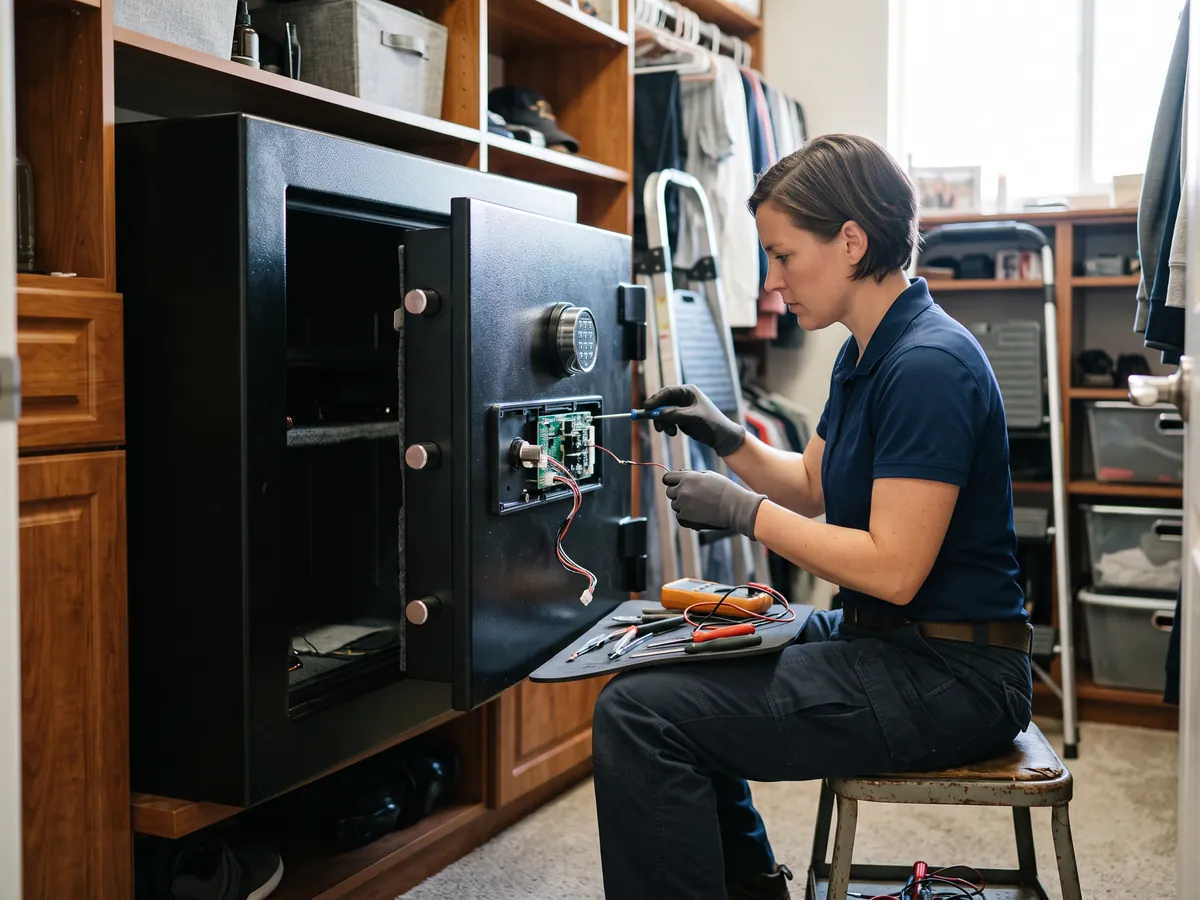
Opening a safe for a stranger is serious business, so a reputable safe locksmith asks questions before touching the lock. We'll want a photo ID that matches the name on the work order, plus a reasonable link between you and the safe: the deed or lease for the property it sits in, a purchase record, a business owner's authorization or estate paperwork. That screening protects you as much as anyone. Once it's settled, Julian's Locksmith gets to work in Colton on the opening, repair or combination change, and we explain each step before it happens so nothing about the job surprises you.
Safe work in Colton shows up in a few forms. A family settling a relative's estate in one of the older La Cadena or 9th Street homes finds a safe in the closet and no combination in the papers. A small business near Valley Boulevard has a drop safe whose key has gone missing. A homeowner has a gun safe whose electronic keypad stopped responding after the battery leaked. Our work includes opening locked safes by manipulation, decoding or, when nothing else works, drilling; changing combinations; replacing electronic keypads and failed batteries; repairing dials and mechanical locks; and replacing keys for drop safes. We have to be straight about the limits. Higher-grade safes with relockers or hardened plates can be drilled only with specialty tools, and a few cannot be opened without damage. You hear that before we start. Because a safe holds valuables, we verify ownership every time: photo ID, plus a receipt, registration card, estate paperwork or other proof that the safe is in your home or business. We will not open a safe for someone who cannot show a right to what is inside.
Safe Locksmith in Colton: what to expect
Every safe has two separate systems, and knowing which one failed shapes the whole job. The boltwork is the heavy part: steel bolts driven by the handle that project into the door frame. The lock is small by comparison and only decides whether the boltwork is allowed to move. In a mechanical combination lock, the dial turns a spindle connected to a drive cam, which picks up a stack of three or four wheels. Each wheel carries a notch called a gate. When the correct numbers line every gate up under the fence, the lever drops into the cam, and turning the dial retracts the lock bolt. An electronic lock swaps the wheels for a keypad, a circuit board and a solenoid or small motor that withdraws a blocking pin, or the bolt itself, after a valid code. Key-operated safes use wafer, tubular or lever locks. For a safe locksmith in Colton, the failed system matters more than the brand name. A dead solenoid and a jammed boltwork cam both produce a handle that won't turn, but one calls for a new lock body and the other for a door that has to be relieved and adjusted.
How we can help in Colton
- Precision drilling and drill-hole repair. Drilling done correctly is precise work, not demolition. Hardplate, relockers and lock position all decide where the bit goes and what tooling it needs. After opening, we plug the hole so it can't become an easy attack point later, touch up the finish and test the new lock several times with the door open.
- Mechanical combination changes. New house, new manager, or a combination that too many people know: all good reasons to reset a mechanical safe lock. We follow the lock maker's rules on forbidden zones and number spacing, then run the new combination several times while watching the bolt from inside. You choose the numbers, and we have no need to keep them.
- Key-operated safes and override keys. Key-locked compartments inside larger safes, depository drawers and narcotics boxes use cam locks and lever locks. We pick or decode them when possible, cut keys on site and replace cylinders that are worn or that too many people have copies of. Ownership verification applies to small lockboxes as much as to large safes.
- Dial, spindle and boltwork repair. Older dial safes, including vintage Mosler, Diebold and Meilink models, often need cleaning, the correct lubricant and a few small parts. We service them carefully, note anything that can't be repaired with available parts and tell you plainly whether the lock deserves preserving or replacing with a modern unit that fits.
- Safe anchoring and placement. Placement matters as much as bolts. We look for a corner that lets the door swing fully, avoids sun-baked exterior walls when possible and keeps the safe level so boltwork and lock stay aligned. In condos and upper floors, we talk through floor loading before a large gun safe goes in.
What's different about Colton
Renters in Colton often own small safes but can't drill into floors or walls without the landlord's permission. We open and repair renter-owned safes like any other, after confirming the safe is yours and you live in the unit. For anchoring, we discuss options such as securing to a wall stud or the closet floor with written permission, which is worth getting before a move-out inspection.
Older houses in Colton sometimes come with surprises: a floor safe poured into a closet slab decades ago, or a wall safe behind a panel that no current owner has opened. These usually carry mechanical dial locks, often from makers that no longer exist. We manipulate them where possible, service tired wheel packs and spindles, and say honestly when a vintage lock should give way to a modern one that fits the opening.
Warehouses and distribution sites keep safes for petty cash, fuel cards, fleet keys and small high-value parts. Shift changes mean many hands, so combinations drift into general knowledge. We change combinations after turnover, install electronic locks with individual codes and audit logs, and work around shift schedules in Colton so the shipping office isn't waiting on a locked key safe at dispatch time.
Situations this covers
Say a family is clearing out a house in the La Cadena district after the owner passed away. In a bedroom closet sits a floor safe with an old dial lock and no written combination. They show ID and paperwork naming them as executors of the estate. We try manipulating the dial first. If the lock has worn too far for that, we drill at the manufacturer's recommended point, open the door and reset the combination so the family can choose a new one.
- For example, a small medical office discovers that the only key to its controlled-substance cabinet left with a departing nurse. The cabinet has to stay securely locked, so propping it open isn't an option. We open the lock, rekey or replace the cylinder on site, cut a limited number of keys for named staff and suggest a simple sign-out log for the future.
- A landlord in Colton discovers a heavy safe left behind by a tenant who has moved out. It's tempting to have it opened right away, but California has a notice process for property a former tenant leaves behind, and the contents may not belong to the landlord. We wait until that process is complete or the landlord has documentation showing the property is legally theirs.
- Picture a short-term rental host whose guest checked out leaving the closet safe locked with a code nobody recorded. Many hospitality safes accept a manager override, either a master code or a key. If the host can't find either one, we open the safe on site, return it to a known state and walk the host through setting a master code properly this time.
From your call to the finished job
- Phone triage and photos. Before driving to Colton, we narrow the problem by phone. A keypad that stays dark is different from one that beeps an error, and a dial that spins freely is different from one that stops early. Your answers shape the plan, the tools we load and the range we discuss for the quote.
- Ownership verification. Estates, separations and rentals need extra care. Executors bring letters from the court or trust documents, landlords show the abandoned-property process is complete, and spouses in a dispute need a court order or both parties present. It can feel slow, but it keeps everyone on solid legal ground.
- Diagnosis at the safe. We read the label, note the lock model and look at how the door hangs. Signs of a previous attack, earlier drilling or water damage change the approach. Once we know what we're dealing with, we explain the options and the likely time for each before going further.
- Non-destructive opening. If your safe has a factory override, we use it. If it's a mechanical dial, we manipulate. If it's an electronic lock with a documented reset path, we follow the manufacturer's procedure. Each of these leaves you with the original safe, a working lock and nothing to patch afterward.
- Drilling, only with your approval. Drilling a safe is about knowing what's behind the steel. Hardplate needs carbide tooling, and relockers punish a hole in the wrong place. We use reference information for the specific lock and safe, drill precisely and open the door without harming the contents. You see the plan before the bit touches metal.
- Repair, new combination and handoff. With the door open, we repair whatever caused the failure, seal any drill hole with hardened steel, install a new lock if needed and set your combination or codes. The lock is cycled many times with the door open, then once more with it closed, before you sign off.
What affects the cost
- Opening method and time. Labor is the largest piece of most safe jobs, and the method decides the labor. A successful non-destructive opening often costs less overall because no repair follows. When drilling is unavoidable, the price covers opening, sealing the hole and installing a working lock, so you're never left with a hole and a broken safe.
- Parts and replacement locks. If the lock body, keypad or dial has failed, replacement parts add to the cost. Prices differ between a basic keypad, a UL-listed electronic lock with audit features and a Group 1 dial. We confirm compatibility with your safe's mounting pattern before ordering, so you pay for the right part once.
- Extra work on the same visit. Once we're on site, adding work costs less than a second trip. Changing a combination, programming user codes, servicing a second safe or anchoring a gun safe to the slab can often be done during the same visit, spreading travel and setup across more tasks.
Every job gets a clear quote before any work starts. Call (951) 903-3193 with the details and we'll tell you what to expect for your situation in Colton.
Common errors that cost time and money
- Hiring whoever promises the fastest drill job. Drilling a safe that would have opened non-destructively costs you a lock and a repair. A careful safe locksmith tries gentle methods first and drills only when there's a reason. Ask how they plan to open the safe before anyone starts.
- Leaving the combination at the factory default. Many new safes ship with a published test combination or code, and plenty of buyers never change it. Anyone familiar with that model may know the default. Set your own combination as soon as you've confirmed the safe works.
- Punching or hammering the dial. Some online videos suggest forcing the dial or spindle to beat a lock. On most safes, this damages the lock and can trigger a relocker, which makes the safe locksmith's eventual opening slower and more destructive. A bent spindle alone adds a repair to the bill.
What to do before we arrive
- For cash-handling businesses, change safe combinations whenever someone with access leaves, and give each manager a separate user code on electronic locks so the audit trail means something. Shared codes make it impossible to tell who opened the safe, which matters a great deal after a shortage.
- Replace keypad batteries on a schedule, not when they die. Once a year is sensible for most safes, and sooner for one in a hot garage. Use fresh, name-brand alkaline batteries unless the lock maker specifies otherwise, and look for green corrosion on the terminal clip while you're at it.
- Test a new combination at least three times with the door open before closing it. Throw the bolt, dial or type the code, confirm the bolt retracts, then repeat. A typo in a new code or a misdialed setting is easy to fix with the door open and expensive with it shut.
- Dial a mechanical lock deliberately. Stop exactly on each number with the index mark centered, and make the correct number of rotations in each direction. Rushing past a number or reversing early is a frequent reason a correct combination fails. If you overshoot, start the whole sequence again from the beginning.
Getting to Colton
Colton is about 11 miles from our San Bernardino base, roughly 17 minutes in light traffic via University Parkway to I-215 South through San Bernardino. When you call, you get an arrival estimate based on where the technician is and the traffic at that moment.
Most trips into Colton use Barton Road for at least part of the drive, and the technician keeps an eye on live traffic along the way so the arrival estimate you heard on the phone stays honest.
About Colton: The Colton Dunes, part of the Delhi Sands formation, are home to the Delhi Sands flower-loving fly, the first fly ever listed as a U.S. endangered species.
| Neighborhoods | Reche Canyon, Terrace Historic District, San Salvador Historic District, North Colton, Cooley Ranch, 9th Street Historic District |
|---|---|
| ZIP codes | 92324, 92313 |
| Main routes | I-10, I-215, Valley Boulevard, La Cadena Drive |
| From our San Bernardino base | about 11 miles via University Parkway to I-215 South through San Bernardino, then I-10 West to the 9th Street exit for downtown Colton; Pepper Avenue exit for the hospital side; stay on I-215 to the Mount Vernon Avenue/Washington Street exit for Cooley Ranch and Reche Canyon |
Safe trouble in Colton?
Call (951) 903-3193 with the safe's brand, the lock type (dial or keypad) and what happened. We'll quote the job before any work starts and ask for proof of ownership on arrival.
Frequently asked questions
Why won't you open a safe for my roommate or ex?
Because we can't confirm that person owns the safe or what's in it. Shared homes, separations and disputes are exactly where safe openings go wrong. When ownership is contested, we need a court order, written consent from both parties or both people present with ID. That rule protects you just as much as it protects anyone else.
Can you open my safe in Colton without damaging it?
Often, yes. Most home and gun safes open without damage once keypad power is restored, an override key is used or a mechanical dial is manipulated. Some situations make drilling necessary, such as a failed lock body, a tripped relocker or fire damage. We explain which applies to your safe before starting, and nothing destructive happens without your approval.
Is a safe locksmith licensed in California?
Locksmith companies in California are licensed by the Bureau of Security and Investigative Services under the Locksmith Act, Business and Professions Code section 6980 and following. Julian's Locksmith holds license LCO7891, which you can look up at search.dca.ca.gov. Ask any company you're considering for its license number before letting it work on your safe.
Will a drilled safe still be secure?
A properly repaired safe returns to service with the drill hole sealed by hardened steel and a new or repaired lock. For most home and gun safes, that protects as well as before for practical purposes. Rated commercial safes may carry insurer or rating considerations, so we document the repair in writing and suggest checking with your insurer if the rating matters.
Should I repair my safe or replace it?
It depends on the safe's quality and what it guards. A sturdy gun safe or commercial safe almost always merits a new lock and a proper repair. A thin electronic fire box that costs little to replace may not justify hours of labor. We give you the honest comparison on site, including what a new lock would add.
Can you tell me my safe's combination without opening it?
Not without manipulating or otherwise opening the lock. Combinations aren't stored anywhere a safe locksmith can look them up. Some manufacturers keep factory combinations or key codes for registered owners and release them with notarized proof of ownership, so try that route first if you can wait. Otherwise, opening the safe and setting a new combination is the practical answer.
How far is Colton from your base?
Colton is about 11 miles from our San Bernardino base, roughly 17 minutes in light traffic. Arrival time depends on traffic and on the job the technician is finishing, so we give you an estimate on the phone before you commit.
Related services in Colton
Safe Locksmith in nearby cities
- Safe Locksmith in San BernardinoSan Bernardino County
- Safe Locksmith in Grand TerraceSan Bernardino County
- Safe Locksmith in Loma LindaSan Bernardino County
- Safe Locksmith in BloomingtonSan Bernardino County
- Safe Locksmith in RialtoSan Bernardino County
- Safe Locksmith in MuscoySan Bernardino County
- Safe Locksmith in HighlandSan Bernardino County
- Safe Locksmith in RedlandsSan Bernardino County