
Citrus, Los Angeles County
Citrus Mailbox and Gate Locks: Repaired, Replaced, Weather-Ready
Short answer: Who fixes a mailbox lock in Citrus depends on who owns the box. If the Postal Service owns your cluster unit, request the change at your local post office. If the HOA, landlord or builder owns it, get their approval and we can swap the lock. A private curbside or wall box is yours to change. Gates are always the property owner's call.
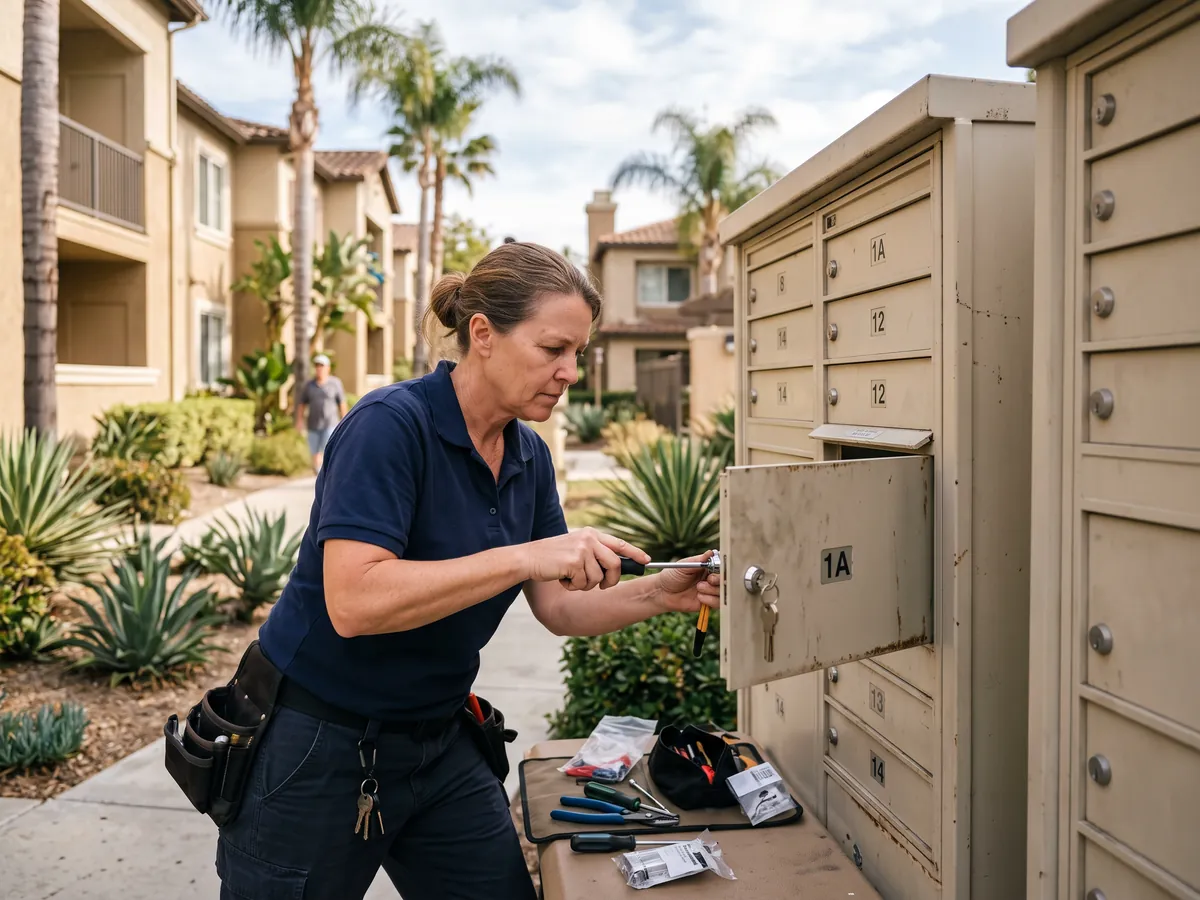
Bought a home in Citrus and received a single mailbox key, a side gate padlock nobody knows the combination to, and a pool gate that only latches when you slam it? That's a common move-in package. The previous owner's housekeeper, gardener and dog walker may all have had access to those locks, and there's no way to know for sure. Julian's Locksmith can change the mailbox lock once you've confirmed who owns the box, replace or rekey gate hardware so it matches your house key where the brands allow, and fix the latch so the gate closes on its own. One visit, one ring of keys, and a clear quote first.
Mailbox and gate locks are small hardware with surprising rules. For mailboxes, the first question is who owns the box. A locking mailbox on your own house, or a mailbox bank at a small apartment building, belongs to the owner, and we can replace its cam lock and cut new keys. USPS-owned cluster box units and their arrow locks belong to the Postal Service, which handles those changes itself, and we don't work on them. Gates are a different problem, and the main enemies are sun, rain and dust. Many Citrus lots have wood side gates and chain-link or wrought-iron driveway gates, some with latches that have been rusting for decades. Winter rain swells wood, summer sun makes plastic latches brittle, and dust from the Santa Ana winds gets into spring-loaded parts. A sagging gate pulls the latch out of line long before the lock wears out. If your lot has a pool, state pool-safety rules generally call for a self-closing, self-latching gate on the enclosure, so a latch that no longer catches is a safety issue. Keep the pool gate key out of children's reach. We repair, rekey and replace both, and for anything shared we help sort out who is responsible: you, your landlord or the Postal Service.
What to know first in Citrus
Mailbox and gate locks cover two families of outdoor hardware that share a few traits: they're small, fully exposed, and usually ignored until they fail. On the mailbox side in Citrus you'll see four main types. Cluster box units, the pedestal-mounted banks common in newer tracts, put a small cam lock on each customer door and a postal master lock on the carrier panel. Horizontal 4C mailboxes in apartment lobbies and mailrooms work the same way but are built into a wall. Older buildings may still have vertical boxes with narrow brass doors. Private homes may have a locking curbside, column or wall-mounted box the owner bought outright. Gate hardware is more varied: gravity and thumb latches on wood side gates, keyed two-sided latches, bolt-on or welded lock boxes holding a deadbolt on iron gates, mechanical and electronic keypads, padlocks on fork latches and chains, self-closing hinges, and electric strikes or magnetic locks on community pedestrian gates. We work on all of it, and every job starts with identifying exactly what's installed, because the correct part depends on details like cam length, gate thickness and backset.
What we can do on-site
- Mailbox cam lock replacement. Worn mailbox keys and sticky locks are often the same problem: a cheap wafer cylinder that has worn down after years of daily turns and grit. Rather than forcing it, we replace the lock with a matching unit, often a pin-tumbler upgrade that resists casual picking better, and test it against the door's closing gap before we leave.
- Lost mailbox key: opening the compartment. A lost mailbox key is a security issue as much as a hassle, because anyone who finds it may be able to match the tag or code to your box. We open the compartment, replace the lock rather than copying the old key, and suggest keeping a spare somewhere other than the keyring that just disappeared.
- Lock boxes and deadbolts on iron gates. Rusted lock boxes are common on older iron gates: water collects inside, the deadbolt seizes, and the strike corrodes into place. We clean or replace the box, add a small drain hole where water pools, install a lock with corrosion-resistant internals, and adjust the strike so the bolt throws fully without anyone lifting the gate.
- Self-closing hinges and pool gate latches. Selling a home with a pool in Citrus? Home inspectors often flag gates that won't self-close or self-latch. We can put those gates back in working order quickly, and if the real issue is the fence, a gap or the enclosure layout rather than hardware, we'll tell you plainly instead of swapping parts that can't fix it.
- Pedestrian gate access hardware. When a pool or courtyard gate at an HOA or apartment complex won't latch, the cause is often a closer too weak to overcome the strike, or a strike set so tight it binds on hot afternoons. We adjust or replace closers and strikes so the gate shuts reliably and the access system registers it as secure.
Local factors in Citrus
Family homes in Citrus rely on gates to keep kids and dogs in the yard and the pool out of reach. Most problems come from sagging wood gates, gravity latches that don't catch, and pull strings anyone can tug from outside. We fix the sag, fit keyed or high-mounted latches, and add self-closing hinges so a gate left open by a busy household shuts itself.
Summer heat in Citrus is hard on mailbox and gate hardware. Electronic keypads drain batteries fast, plastic latch parts go brittle in direct sun, and dark metal gates get hot enough to make tight hardware bind. We recommend mechanical keypads or lithium-powered electronic ones, metal latches over plastic, and slightly relaxed strike fit so gates still latch reliably on afternoons when temperatures peak.
Older neighborhoods in Citrus tend to have the widest variety of mailboxes: original wall-mounted slots, through-door chutes, aging cluster units the Postal Service may own, and curbside boxes on rotting posts. Gates are often decades-old wood with tired hinges, or iron with lock boxes rusted inside. We match vintage hardware where possible and reinforce what's sound instead of tearing everything out.
Example situations
Picture a house on Linfield Street where the wall-mounted mailbox key has gone missing and the side gate latch has rusted so badly that it only catches if you shove. During one visit we replace the mailbox cam lock and cut two keys, then swap the gate latch for a weather-resistant model, rehang the gate a half-inch higher and key the new latch to match the house.
- Imagine a stucco home in Citrus with a decorative iron front gate and a thumbturn deadbolt in a lock box. Anyone standing on the walkway can slide an arm between the pickets and open it. We'd fit a perforated steel shield around the lock area, or a double-cylinder deadbolt if the gate isn't part of an exit path, so it still opens easily from inside but not by reaching through.
- A typical rural call: a horse property on the edge of Citrus has a pipe gate held by a chain and a padlock rusted solid after years of sprinkler overspray. We'd cut only the lock, keep the chain if it's still sound, and fit a brass or stainless shrouded padlock keyed alike with the barn and tack room locks, so one key handles every gate and door on the property.
- Picture a pedestrian gate at a small condo complex in Citrus where the electronic keypad goes dark every August. The batteries are cooking inside a black housing that faces west. We'd replace it with a mechanical pushbutton lock, or move an electronic unit to a shaded mount running lithium cells, then set new codes and walk the manager through changing them whenever a resident moves out.
Step by step with Julian's Locksmith
- Call and describe the box or gate. Describe the problem in plain words: key lost, lock spins, latch won't catch, keypad dead, gate drags on the ground. We'll ask a few follow-up questions, give you an honest ETA, and tell you during that first call if it sounds like a post office matter rather than a locksmith job.
- Confirm ownership and authorization. Common-area hardware always belongs to someone, and that someone has to approve the work. For HOA mailboxes and gates we'll ask for a work order or an email from the board or manager. For rentals we need the landlord's approval. At your own home, proof that you live there is enough.
- Inspect the hardware and its conditions. We look for what caused the failure, not just what failed. A latch that won't catch may be sitting on a sagging gate; a mailbox lock that sticks may work fine once packed grit is cleared. Diagnosing first prevents installing new hardware on top of a problem it can't fix.
- Quote the options before starting. For associations and property managers, we can quote a batch: a set number of compartment locks, several gates, or a mix of both. That lets you approve the whole scope at once and keeps every unit on matching hardware, which makes future turnovers simpler.
- Do the work on-site. Outdoors we use stainless fasteners, through-bolt where screws would strip, and seal drilled holes in metal so rust doesn't start there. On vinyl gates we add internal reinforcement before mounting any lock, because screws alone eventually pull out of hollow vinyl rails.
- Test, hand over keys, keep records. We test every key in every lock, close the gate from wide open and from a few inches open, and confirm the latch catches each time. You get your keys, the key code where one exists, and a short note listing what was installed and where.
What affects the cost
- Key in hand or opening required. Picking a simple wafer lock is quick; a pin-tumbler upgrade, a damaged cylinder or a lock packed with debris may need drilling. Drilling destroys the old lock, so a replacement becomes part of the job automatically. Either way, we explain which approach we plan to use before we start.
- Gate material and mounting prep. If the gate is sagging, warped or out of square, no lock will work properly until that's corrected. Re-hanging hinges, adding anti-sag hardware, shimming a strike or bracing a leaning post adds time, but it usually costs far less than replacing the gate and is the only fix that lasts.
- Hardware grade and weather rating. Bargain latches and padlocks are cheap for a reason and tend to fail fast in full sun and sprinkler spray. Stainless or marine-grade hardware, mechanical keypads, and brass or stainless padlocks cost more up front but last much longer outdoors. We'll quote both levels so you can weigh the difference.
Every job gets a clear quote before any work starts. Call (951) 903-3193 with the details and we'll tell you what to expect for your situation in Citrus.
Common errors that cost time and money
- Keeping the same gate code for years and writing it on the gate post for convenience. Every former gardener, pool tech and guest still knows it. Codes should change when people stop needing access, and they belong in a phone note or a property manager's file, not in permanent marker on the hardware.
- Replacing a latch on a gate that has sagged without fixing the sag. The new latch lines up for a week, then the gate drops a little more and it misses again. The real repair is at the hinge side: tightened or relocated hinges, an anti-sag kit, or a braced post. Then the latch has something stable to catch.
- Calling a locksmith to change a lock on a Postal Service-owned cluster box, or worse, asking anyone to work on the carrier's master lock. Postal locks are federal property, and no legitimate locksmith will touch them. Check ownership first, and if the unit belongs to the Postal Service, start at the post office counter.
Advice before you book
- On vinyl gates, ask about reinforcement before adding any lock or latch. Hollow vinyl rails won't hold screws under daily use; an aluminum or wood insert inside the rail gives fasteners something solid to bite into. Skipping it means the latch works loose within months, usually right when you need the gate closed.
- Sign up for the Postal Service's free Informed Delivery, which emails you a preview of letter mail headed to your address. If something shows up in the preview but never reaches your box, you'll know quickly, and you can report it rather than wondering for weeks whether it was ever sent.
- Look closely at your mailbox key and the face of the lock. Many carry a short stamped code. Write it down along with the box brand and keep that note somewhere other than your keyring. When a key is lost or the lock wears out, that code lets a locksmith cut a replacement or match the lock without guesswork.
- Outdoor locks in Citrus should get dry lubricant, never oil. Graphite or a PTFE-based lock spray keeps pins moving without collecting the fine dust that blows in on windy days. General-purpose penetrating oil feels like it helps for a week, then turns into a gummy paste that jams wafers and pins.
Service in Citrus
Citrus is about 37 miles from our San Bernardino base, roughly 42 minutes in light traffic via Palm Avenue to I-215 North, I-15 South at Devore. When you call, you get an arrival estimate based on where the technician is and the traffic at that moment.
Stuck on the shoulder or in a parking lot along I-210? Get somewhere safe, turn on your hazards, and give us the nearest exit or business so we can find the car without guessing.
About Citrus: Because Citrus has no city government, Los Angeles County provides local services, with the Sheriff's Department handling law enforcement and the county fire department answering fire and medical calls.
| Neighborhoods | North of the 210, Chadley Street, Gladstone Street corridor, Hollyvale Street area near Barranca Avenue, Cerritos Avenue and Gladstone Street, Barranca Avenue edge along the Glendora city line |
|---|---|
| ZIP codes | 91702, 91722 |
| Main routes | I-210, Citrus Avenue, Cerritos Avenue, Barranca Avenue |
| From our San Bernardino base | about 37 miles via Palm Avenue to I-215 North, I-15 South at Devore, then SR-210 West (the Foothill Freeway, signed I-210 past the 57 interchange) through Rancho Cucamonga, La Verne and Glendora to the Citrus Avenue exit, which lands in the middle of Citrus |
Mailbox or gate lock in Citrus?
Call (951) 903-3193 and tell us whether it's a private mailbox, a cluster box unit or a gate. We'll tell you whether the job is ours or the Postal Service's, and quote our part before any work starts.
Frequently asked questions
How do I find out who owns our cluster mailbox?
Ask your HOA management company first; associations usually know whether they bought the units. If they don't know, ask at the post office counter for your ZIP code, since the Postal Service keeps track of the units it owns. Older delivery areas often have postal-owned units, while newer tracts usually have builder-purchased units that now belong to the association or residents.
Will you have to drill my mailbox lock if the key is lost?
Not always. Many compartment locks are simple wafer or short pin cylinders that can be picked open without damage. Drilling is the backup when the lock is a higher-security type, badly worn, or packed with debris. Either way, the old lock gets replaced and you receive new keys, so nobody holding the lost one can use it.
Can you open the parcel locker or the master door on our mailbox?
No. The carrier's master lock and the parcel locker locks on cluster units are controlled by the Postal Service, and only postal staff service them. If a parcel locker is jammed or a package is stuck, contact your local post office. We work only on the customer compartment locks of units that aren't postal property.
Can a locksmith change my mailbox lock in Citrus?
Yes, as long as the mailbox isn't Postal Service property and you have the right to authorize the work. Private curbside and wall boxes are yours. Cluster units and apartment mailboxes owned by an HOA or landlord need their approval. If the Postal Service owns the unit, the lock change has to be requested at your local post office.
What do you need from me before opening my mailbox?
Proof that you're entitled to that box. Photo ID with the matching address works, as does a lease or utility bill with ID. For apartment or HOA mailboxes, we may also need approval from the manager or association. Mail theft is a serious problem in Southern California, and that check keeps us from opening a box for the wrong person.
Can you key my gate lock to my house key?
Often, yes. Many keyed gate latches and lock-box deadbolts use standard cylinders that can be pinned to a Kwikset or Schlage house key. Padlocks are trickier; some brands can be rekeyed, others are sold keyed alike in sets. We'll tell you what's possible with your gate before you buy hardware so you don't end up with yet another key.
How far is Citrus from your base?
Citrus is about 37 miles from our San Bernardino base, roughly 42 minutes in light traffic. Arrival time depends on traffic and on the job the technician is finishing, so we give you an estimate on the phone before you commit.
Related services in Citrus
- Mailbox Lock Replacement in Citrus
- Gate Lock Repair in Citrus
- Cluster Mailbox Lock in Citrus
- Lost Mailbox Key in Citrus
- Keypad Gate Lock in Citrus
- Weather-Resistant Gate Lock in Citrus
- Locksmith for Gated Property in Citrus
- Gate Latch Repair in Citrus
- Community Mailbox Lock in Citrus
- Mailbox Key Duplication in Citrus
Mailbox & Gate Locks in nearby cities
- Mailbox & Gate Locks in AzusaLos Angeles County
- Mailbox & Gate Locks in CovinaLos Angeles County
- Mailbox & Gate Locks in Charter OakLos Angeles County
- Mailbox & Gate Locks in GlendoraLos Angeles County
- Mailbox & Gate Locks in IrwindaleLos Angeles County
- Mailbox & Gate Locks in West CovinaLos Angeles County
- Mailbox & Gate Locks in San DimasLos Angeles County
- Mailbox & Gate Locks in DuarteLos Angeles County

