
Bloomington, San Bernardino County
Car Lockout Service in Bloomington
Short answer: Keys in a closed trunk and smart fobs locked inside push-start cars are the two lockouts people assume are hopeless, and both are routine for us in Bloomington. We open a door first, then reach the trunk through its release, the fold-down seats or the interior emergency handle. With a fob left inside, we open the car and then find out why it went undetected.
We'll be straight with you about timing, because a car lockout is all about timing. Julian's Locksmith runs from 6:30 a.m. to 11:30 p.m. every day of the week, weekends included. Inside those hours we take lockout calls across Bloomington as they come in and give you a realistic arrival window on the phone, based on where our van is and the traffic between us. Outside them, we'll point you toward the options that genuinely help, like a roadside plan, a household spare or the automaker's app. Either way, call (951) 903-3193 first and we'll give you a straight answer.
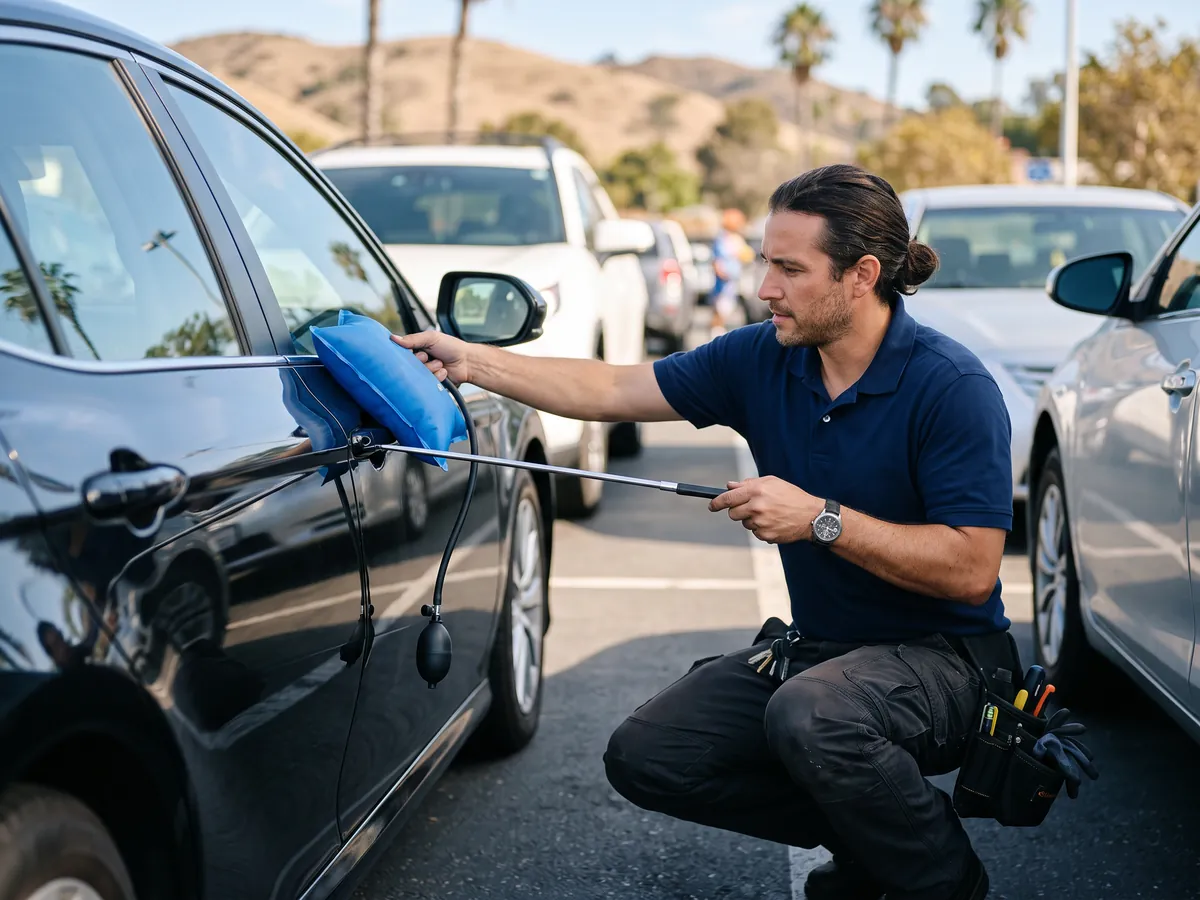
Car lockouts in Bloomington tend to happen at a standstill in a dusty lot, not at a parking meter. A truck gets locked with the engine running while a trailer is hooked up. Keys end up on the seat when hay is being loaded. A fob stays in a jacket after the school run to Joe Baca Middle School, and a push-button car locks itself behind its owner. We open vehicles without damage. Inflatable air wedges create a small gap, long-reach tools press the unlock button or pull the handle, and Lishi tools decode and pick the door cylinder when a vehicle calls for it. Modern doors hold side-impact airbags, wiring and tight weatherstripping, which is why a coat hanger or slim jim is the wrong tool for the job. Trunks and truck-bed covers have their own methods, and we tell you up front which one applies. Before we open any car, we ask for photo ID and a registration or other proof the vehicle is yours. In summer a closed cab heats far above the outside temperature, so if a child or pet is inside, call 911 first.
Car Lockout in Bloomington: what to expect
Car door locks are wafer locks, not the pin-tumbler cylinders on your front door. Flat wafers ride inside the plug and must line up at the shear line before it will turn. A Lishi 2-in-1 tool is built for one specific keyway, such as HON66 for many Hondas and Acuras, HU101 for a range of newer Fords, or HU100 for many late-model GM vehicles. It applies light turning tension and lets us feel and set each wafer in turn, while a built-in gauge records how far each one moved. When the plug rotates, the lock opens as if the key had turned it, and those gauge readings become the cut depths for a new key. That second benefit matters when your keys are lost rather than locked inside. Two honest caveats apply. Door cylinders often omit a few wafer positions, so a door decode may leave some cuts to be worked out by other means. And cylinders that haven't turned in years can be stiff with grit and dried grease, which slows things down. Picking takes longer than a wedge, but it touches nothing except the lock.
What we can do on-site
- Lishi lock picking and key decoding. When a wedge isn't the right call, we pick the driver's door lock with a Lishi tool made for that exact keyway. It sets each wafer individually and turns the cylinder the way your key would, so the lock keeps working normally afterward. It's our go-to for frameless glass, shielded doors and cars whose interior controls are disabled.
- Keys locked in the trunk. Some trunks only unlock from inside the trunk itself, with seatback pulls that can't be reached from the rear seat. In those cars we may thread a reach tool through the pass-through toward the glow-in-the-dark emergency release, or decode the trunk lock. We'll explain what your model allows before you agree to any work.
- Truck, van and work-vehicle lockouts. Full-size pickups and heavy-duty trucks have thick, stiff doors and armrest switches far from the gap, so we bring longer, heavier reach tools. Lifted trucks put the work above head height, and locking tonneau covers, camper shells and toolboxes often use their own keys. Tell us which compartment the keys are actually in.
- Urgent lockouts: running engines, kids and pets. Kids sometimes lock the car themselves, pressing the fob or the door switch while a parent loads groceries. If the child is calm, the cabin is cool and you can talk through the glass, a locksmith is the right call. If the car sits in sun or the child is distressed, emergency services come first, every single time.
- Lockouts with no key at all. Sometimes the car is locked and the keys are simply gone. We open the door, decode the lock, cut a new blade and program a transponder key or smart fob through the OBD-II port, after verifying ownership. Most popular makes are handled on site; some models still need dealer programming, and we'll tell you which.
How Bloomington shapes the job
Long commutes out of Bloomington mean early starts, park-and-ride lots and cars left for ten hours at a stretch. Those are prime conditions for a lockout: keys set on the seat while grabbing a lunch bag in the dark, or a battery that gives up after a long day in a sun-baked lot. Our day starts at 6:30 a.m., which lines up with the predawn rush, and we bring wedges and picks to the lot instead of asking you to tow anywhere.
Warehouses and distribution centers around Bloomington run on box trucks, cargo vans and fleet pickups, and a locked vehicle at the dock can hold up a whole route. We open cabs and cargo areas without damaging upfits or shelving, confirm authorization with a supervisor or fleet manager, and can cut spare blades on site so the next lockout doesn't stall a shift.
Inland heat is hard on cars in Bloomington. Coin cells in smart fobs weaken faster when keys bake on a dashboard, which leads to undetected fobs and push-start cars locking with the key inside. Door cylinders that rarely turn dry out and stiffen. And a locked car in summer sun is dangerous for anyone inside, so if a child or pet is in the cabin, call 911 first and us second.
Situations this covers
A man unloads feed bags from his pickup in the Kessler Park lot, closes the door to keep the dust out and realizes his key fob is on the seat. The proximity system locked the truck as he walked away. He can show a registration photo on his phone and his license. We would set an air wedge in the door frame, reach the unlock button with a long tool and have him back at the arena without a scratch on the paint.
- Say it's 11:45 p.m. on a Saturday and you're locked out at a park in Bloomington. We close at 11:30 p.m., so we wouldn't be the right call that night. A roadside plan, a household member with the spare, or the automaker's remote-unlock app are your realistic paths. If the car can safely sit, we open again Sunday at 6:30 a.m. and would gladly help then.
- For example, a visitor staying at a hotel off Alder Avenue locks a rental car with the fob inside the trunk, along with all the luggage. The rental company's roadside line quotes a long wait, and the agreement permits outside service for lockouts. We'd review the agreement and the visitor's license, open a door, use the trunk release, and write the agreement number on our work order.
- Picture coming back from a week away to an older sedan in a long-term lot, pressing the fob and getting nothing at all. The 12-volt battery has drained, and the keyhole on the driver's handle hasn't turned in years. Forcing the thin emergency blade could snap it off in the lock. We'd pick the cylinder with a Lishi tool, open the hood release so a jump start is possible, then lubricate that lock so it works next time.
How the visit works
- Tell us where the keys are. When you call, the first question is where the keys are: visible in the cabin, in the trunk, inside a locked compartment, or missing. Then the year, make and model, and whether anyone or anything is inside. Those answers decide which reach tools, Lishi picks and key blanks we load before leaving.
- Get a quote and an arrival estimate. We price the job on the phone, not after the door is open. The quote reflects your vehicle, the time of the call and the drive from our current location to yours in Bloomington. If the number works for you, we head out and keep you posted if traffic shifts the timing.
- Size up the vehicle and the scene. On arrival, we walk around the car and try every door and the hatch, because one is sometimes unlocked. Then we look at the door construction, the glass, the interior lock layout and the key's location, and choose between the wedge-and-reach method and picking the lock.
- Open the vehicle. Entry stays unhurried even when you're in a rush. We inflate the wedge slowly, watch the door frame and glass, and stop at the smallest gap that works. On picking jobs, light tension and steady feedback beat force. Most of the time, the door opens shortly after the tools go in.
- Confirm ownership. Before you take the car back, we match your photo ID to the registration or proof of insurance, often pulled from the glove box once the door is open. For rentals we check the rental agreement; for company vehicles, we get authorization from the owner or fleet manager.
- Test everything and prevent a repeat. We finish by making sure you can get yourself back in next time: showing you the hidden keyhole, the blade release on your fob, or your car's lock settings. A few minutes of explanation after the job is often worth more than the entry itself.
What affects the cost
- Vehicle design and lock security. Cylinder condition counts too. A door lock that's used daily picks cleanly; one that has sat untouched for a decade under sun and dust may be stiff or seized. That rarely changes our approach, but it can lengthen the job, and we'll tell you if we see it before going further.
- Where the keys ended up. The exact spot inside the vehicle changes the work. A fob in the cupholder is reached from the driver's door, but keys in a locked glove box, a center console with its own lock, or a pickup toolbox mean extra work after entry. Describe where you last saw them so the quote covers everything.
- Distance and site access. Location affects safety, and safety affects how we work. A car parked tight against a wall, on a steep driveway or along a busy stretch of Cedar Avenue can take longer to open properly, because we may need to reposition the van or work from the far door. We'd rather take the time than rush beside traffic.
Every job gets a clear quote before any work starts. Call (951) 903-3193 with the details and we'll tell you what to expect for your situation in Bloomington.
What not to do
- Breaking a window as a first resort when nobody inside is in danger. Tempered side glass shatters into fragments that hide in seat tracks and door cavities for months, laminated glass won't break cleanly at all, and the replacement plus cleanup usually costs more than having the door opened.
- Calling a tow truck to haul a locked car to the dealership when the keys are sitting right there on the seat. Towing adds cost and takes the car out of your hands, and the dealer still has to get it open. Most car lockouts are handled right where the vehicle is parked.
- Using a slim jim on a modern car. Behind today's door panels sit side-impact beams, airbag sensors, wiring and cable-operated latches, often guarded by anti-theft shields. Fishing blindly can disconnect a latch cable or nick a harness, leaving you with a door that won't open from the inside.
What to do before we arrive
- Find the hidden key inside your smart fob today. Most fobs have a small slide or button that frees a mechanical blade. Then look at your driver's door handle for a keyhole or a blank plastic cap covering one; the owner's manual shows how to remove it. Learning this calmly at home beats figuring it out in a dark parking lot.
- Before calling anyone, walk around the vehicle and try every door, the rear hatch and, on a pickup, the sliding rear window. It takes seconds and occasionally solves the whole problem. Also check whether a passenger or family member has the second fob nearby, since that beats any locksmith's arrival time.
- Keep a spare key somewhere useful: with a household member, at work, or with a neighbor you trust. A magnetic box under the bumper is the first place a thief looks and often shakes loose on the freeway. For push-start cars, even a spare mechanical blade cut to your fob's code will open the driver's door.
- Learn where your car's trunk controls live: the release button on the dash or door, the floor lever beside the driver's seat, and any lockout switch inside the glove compartment. If that switch is off, the cabin release goes dead. Leave it enabled unless you're actually handing the car to a valet.
Service in Bloomington
Bloomington is about 14 miles from our San Bernardino base, roughly 22 minutes in light traffic via Belmont Avenue and Palm Avenue to I-215 South, SR-210 West to the Riverside Avenue exit. When you call, you get an arrival estimate based on where the technician is and the traffic at that moment.
Our path into Bloomington depends on where the previous job wrapped up. Sometimes that's a straight run via Locust Avenue; other times it's surface streets the whole way. Either way, you get a heads-up call when the technician is close.
About Bloomington: Bloomington High School on Laurel Avenue opened in 1962, and the community's public schools belong to the Colton Joint Unified School District.
| Neighborhoods | South Bloomington, Locust Avenue and Alder Avenue horse properties, Valley Boulevard corridor, Crestmore, Original 1888 town site, Santa Ana Avenue large-lot area |
|---|---|
| ZIP codes | 92316, 92335 |
| Main routes | I-10, Cedar Avenue, Valley Boulevard, Slover Avenue |
| From our San Bernardino base | about 14 miles via Belmont Avenue and Palm Avenue to I-215 South, SR-210 West to the Riverside Avenue exit, then south on Riverside Avenue and west on Bloomington Avenue; the alternate is I-215 South to I-10 West and the Cedar Avenue exit, about 17 miles |
Mornings start early here: phones are answered from 6:30 a.m. seven days a week, which suits commuters who discover a missing key in the driveway and shop owners who can't open the front door. Saturday and Sunday are no different. Every day runs to 11:30 p.m.
ID locked inside with your keys? That's a common situation, and it isn't a dead end. We can open the door, and you show us your license or a piece of addressed mail from inside before we pack up. If nothing inside proves residence, your landlord or property manager can usually confirm it by phone.
Locked out of your car in Bloomington?
Call (951) 903-3193 with the year, make and model and where the car is parked. You'll get an arrival estimate and a quote before anyone heads out. If a child or pet is shut inside a hot car or building, call 911 first.
Frequently asked questions
Will my alarm go off when you open the door?
It often will, and that's expected. Opening a locked door without the remote looks like a break-in to the factory alarm. On most cars the horn stops once the fob's unlock button is pressed, the key is turned in the ignition, or the start button is pushed with the fob nearby. We recover your keys right after entry so the noise doesn't last long or draw much of a crowd.
My keys are locked in the trunk and the car has no trunk keyhole. Now what?
That's normal on many newer sedans, and it rarely matters. We open a door, then use the trunk button on the dash or door panel, the release lever beside the driver's seat, or the fold-down rear seats. If the glove-box valet switch has shut off the release, we turn it back on. As a last resort, a reach tool through the pass-through can sometimes get to the trunk's interior emergency handle.
What do I need to show you after you open my car in Bloomington?
A government-issued photo ID with a name that matches the registration or insurance card, which often turns up in the glove box once we're inside. If the car belongs to a relative, an employer or a rental company, we'll need the owner's confirmation or the rental agreement. Locked your wallet in too? No problem: we open the car, then check the documents together before you leave.
What hours can I call you for a car lockout?
We're open every day from 6:30 a.m. to 11:30 p.m. We're closed overnight. During those hours we take lockout calls in Bloomington as they come in and give you an honest arrival estimate. Outside them, your best options are usually a roadside plan, a spare key held by someone nearby, or the automaker's remote-unlock app.
How is the price of a car lockout decided?
We look at the vehicle, where the keys are, the time of your call and the drive to your location, then quote a clear figure before anyone heads out. A sedan with keys on the seat is the simplest job. A frameless coupe that needs picking, a trunk with no cabin release, or a car with a dead battery takes more. If something unexpected turns up on site, we re-quote before continuing.
Can you open a European car that's been double-locked?
Usually, by picking. When some European models are locked twice in a row with the remote, they deadlock: the interior handles and lock buttons stop responding, so pressing the switch with a reach rod accomplishes nothing. Turning the driver's door cylinder with the correct Lishi tool cancels the deadlock the same way your key would. The alarm may sound until the car recognizes its key.
How far is Bloomington from your base?
Bloomington is about 14 miles from our San Bernardino base, roughly 22 minutes in light traffic. Arrival time depends on traffic and on the job the technician is finishing, so we give you an estimate on the phone before you commit.
Related services in Bloomington
- Locked Out of Car in Bloomington
- Keys Locked in Car in Bloomington
- Keys Locked in Trunk in Bloomington
- Trunk Lockout in Bloomington
- Unlock Car Door in Bloomington
- Emergency Car Lockout in Bloomington
- Mobile Car Lockout Service in Bloomington
- Lost Car Key Replacement in Bloomington
- Key Fob Replacement in Bloomington
- Spare Car Key in Bloomington
Car Lockout in nearby cities
- Car Lockout in RialtoSan Bernardino County
- Car Lockout in FontanaSan Bernardino County
- Car Lockout in ColtonSan Bernardino County
- Car Lockout in RubidouxRiverside County
- Car Lockout in Grand TerraceSan Bernardino County
- Car Lockout in North FontanaSan Bernardino County
- Car Lockout in Jurupa ValleyRiverside County
- Car Lockout in San BernardinoSan Bernardino County