
Artesia, Los Angeles County
Lock Repair in Artesia
Short answer: A lock that sticks, spins, rattles or only works when you lift the door usually has a cause you can name. Cleaning, re-pinning, a new cam or spring, or a strike adjustment fixes most of them. For lock repair in Artesia, Julian's Locksmith diagnoses on site and quotes before any parts come out. Call (951) 903-3193.
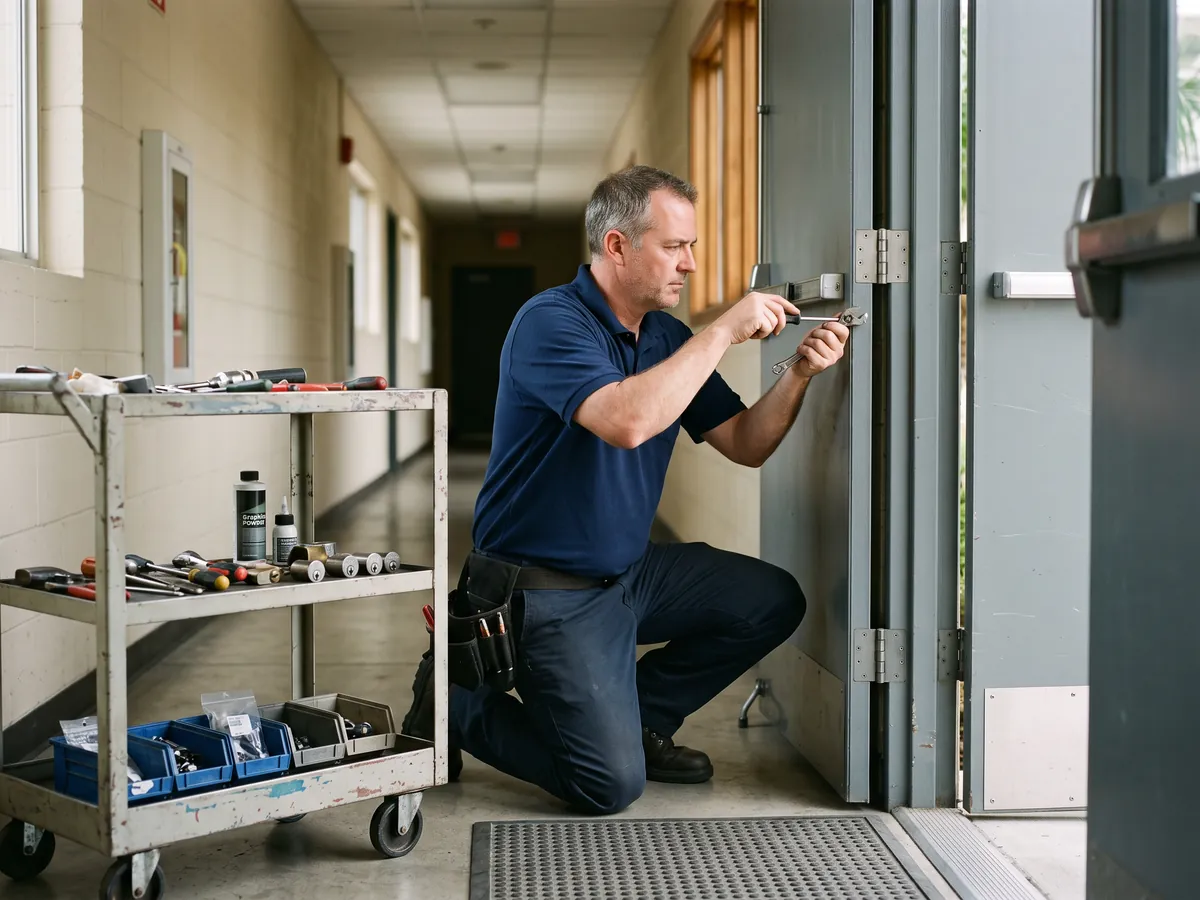
The scariest lock isn't the broken one. It's the one that still works most of the time. A bolt that sometimes stops short, a knob with a little play, a key that needs coaxing: each is an early warning, and each tends to fail on the worst day, usually while you're running late or your hands are full. Lock repair in Artesia is simplest and cheapest when you catch the symptom early. We look at the lock while it still functions, find the worn part before it snaps, and fix it on the spot where we can. You leave with a lock you trust, not one you plan around.
What to know first in Artesia
What you do before the visit matters. Don't force a key that won't turn, because bending or snapping it adds a second problem. Skip penetrating oil in the cylinder, which tends to gum up with dust; a puff of dry graphite is safer. Try the spare key, then see whether the trouble appears with the door open or shut. With a keypad lock, replace the batteries first. If the lock can't secure the door, think about interim protection: use another entrance, wedge a chair or doorstop bar under the knob from inside, or block a sliding door's track with a dowel. Take photos of the lock, the door edge and any brand marking you can see, and note when the problem started and whether anything changed, such as painting, a storm or a move. If the cause is a break-in, touch as little as possible and keep photos. These few steps shorten the visit and help us bring the right parts for lock repair in Artesia.
How we can help in Artesia
- Worn or bent keys and fresh cuts. Brass keys are soft, and years of pocket and keychain wear round off the cuts. A fresh key from the code or from a good original restores the exact depth the pins expect. It's the simplest repair there is, and it's worth ruling out before anyone drills or replaces a thing.
- Cylinder cleaning, lubrication and re-pinning. A gritty or sticky cylinder often needs cleaning, not replacing. We remove the old lubricant and debris, apply dry graphite or a PTFE-based lubricant that doesn't attract dust, and run the key through its full travel. Pins or springs that have worn out are replaced individually.
- Replacing cams, tailpieces, springs and spindles. A knob that spins without engaging, or a deadbolt that turns all the way around, typically has a broken retractor or cam. We open the lock, identify the broken piece and replace it. If the housing is cracked or the part can't be found, we recommend a replacement lock instead.
- Forced-entry and break-in damage. If someone has pried or kicked your door, the bolt may still turn but no longer resists much force. We repair splintered wood, replace the bent strike with a reinforced one and fit longer screws. Then we test the whole assembly, not just the lock body.
- Keypad and electronic lock faults. Intermittent keypad faults point to low batteries, corroded contacts or a loose cable. We check each, clean connections and reseat the harness. If the board or motor needs replacing, we say so and compare that option with a fresh lock.
Local factors in Artesia
Apartment locks get heavy use and change hands often. Repairs need the owner's or manager's authorization, and a failing lock may point to a pattern across units, such as the same worn model or a settling building. We repair or replace to the owner's standard, describe what we found, and keep tenants from making unauthorized swaps. A tidy record of each repair also helps management plan upgrades across the building.
Storefront locks turn all day, and the cylinder wears long before the door does. Keys copied for staff degrade, and a gritty lock at closing time is a bad sign. We service cylinders, narrow-stile locks and latches. Because we're closed overnight, call early in the day for anything that can't wait. Rekeying staff cylinders during the repair also retires keys held by former employees.
Houses with original hardware bring mortise cases, glass or porcelain knobs, skeleton keys and plaster walls, and parts that were last made decades ago. Lock repair here is closer to restoration: we clean and rebuild what can be rebuilt, fit new springs and cams where they exist, and tell you honestly when a lock is worth saving. Soft jambs and short old screws often deserve attention too.
Example situations
- A homeowner repainted the front door without removing the hardware, and now the latch sticks and the strike pocket is packed with dried paint. We scrape the paint from the latch face and strike, clean the mechanism, lightly lubricate it with a dry product and check that the door closes freely without catching on anything.
- A back door knob spins freely without moving the latch, so the door can't be opened from either side. The retractor inside has broken. We take the knob apart, replace the damaged piece with a matching one, and confirm the latch pulls in smoothly when the knob is turned from inside or out. The rest of the lock, including its finish, stays.
- A security screen door's lock box has stopped catching, and the owner can't tell whether the lock is worn or the frame has flexed. We find the strike side has shifted slightly, reposition the keeper, clean dust from the latch and apply dry lubricant. The screen closes with a click again, and the main door is left untouched.
- A typical call: the deadbolt on a stucco house near Holy Family Catholic Church turns fine with the door open but stops short once the door is shut. The lock is healthy; the house has settled and the strike no longer lines up. We tighten the loose top hinge with a long screw, deepen the strike pocket slightly and test the bolt until it throws all the way without force.
From your call to the finished job
- Tell us exactly what the lock does. Call (951) 903-3193 and describe the symptom in your own words: where it happens, when it started and what it sounds or feels like. Mention the type of door, whether the problem appears open or shut, and anything you've tried. Those details help us bring the right tools and parts.
- Confirm ownership and try the key. Ownership comes first because a lock is how a property stays protected. Once that's settled, we test the key, the spare and the lock's action, feeling for gritty travel, loose play or a stall. Those first minutes of testing usually point to the failing component.
- Isolate key, cylinder, latch or door. Detaching the bolt from the door helps. If the lock operates smoothly on its own but binds on the door, the problem is alignment, not hardware. If it binds off the door too, the mechanism needs service. That distinction saves you from replacing a lock that was never at fault.
- Quote the repair beside the alternative. Before any parts come off, you get the repair price and, when it applies, the replacement price. We explain what each fixes, what each leaves unchanged, and how long we expect the repair to hold. You choose, and nothing starts until you do.
- Repair, rekey or replace as agreed. With your approval, we make the repair: cleaning and lubricating, replacing a spring, cam or latch, correcting the strike, or fitting a new lock. If keys are in question, we rekey in the same visit, so the lock you end up with is both working and under your control.
- Test under real conditions and leave care notes. A repair is finished when it holds up under normal use. We run the lock through repeated cycles, check the strike and confirm the door still closes cleanly. Then we leave simple care notes: dry lubricant only, where the screws are, and which symptoms mean it's time to call.
Pricing factors
- Which part has failed. Phone estimates only go so far, because the same symptom can have several causes. We tell you what's likely, then confirm the exact quote once we've tested the lock at the door and know which component is at fault, before any work begins.
- Repair versus replacement. Repair isn't always the cheaper choice over time. A worn builder-grade lock may need a part now and another next year, while a new lock resets the clock and improves security. Your quote includes both paths, so the long-term picture is visible.
- Door, jamb and hinge work. Doors that need a new strike pocket, a reinforced jamb or a plug for old holes add steps beyond the lock itself. These are often small jobs, but they're real labor, so they appear as their own line in the quote.
Every job gets a clear quote before any work starts. Call (951) 903-3193 with the details and we'll tell you what to expect for your situation in Artesia.
Mistakes to avoid
- Waiting until the lock fails completely. A bolt that only half-throws or a key that needs coaxing is a security gap, because the door may look locked and not be. Early repairs are simpler, and they avoid the lockout that tends to arrive at an inconvenient hour.
- Forcing a key or using pliers to turn it. A key that binds is telling you something, and brute force bends the blade, damages the pins or breaks the key off inside. Stop, back the key out, try the spare and let the symptom guide the repair.
- Replacing the lock when the problem is the door. If hinges have loosened or the frame has moved, a new lock fails the same way within weeks. A quick test with the bolt detached from the door shows whether the lock or the door is at fault before any parts are bought.
Practical tips before you call
- Walk the property twice a year and operate every lock, including gates, garage entry doors, sheds and side doors. Listen and feel for gritty turns, play in the handle or a bolt that hesitates. Catching one of these early is a quick fix; ignoring it leads to a lockout.
- Try your spare key before you suspect the lock. If the spare turns smoothly and your everyday key doesn't, the everyday key is worn, bent or a copy of a copy. A fresh cut from the original or by code costs far less than any cylinder work and often ends the problem on the spot.
- Photograph the lock, the door edge and any brand or model marks on the faceplate. Add a quick measurement of the distance from the door edge to the center of the lock. With those details, we can tell right away whether a part is easy to find and often arrive with the right one.
- Check the screws before anything else. Loose faceplate, strike and hinge screws cause rattling, drooping and misalignment. If a screw just spins, don't keep cranking it; a longer screw or a repaired hole holds better. Tightening a loose screw properly can fix a lock that seems far worse than it is.
Service in Artesia
Artesia is about 63 miles from our San Bernardino base, roughly 66 minutes in light traffic via Palm Avenue to I-215 North, I-15 South to I-10 West. When you call, you get an arrival estimate based on where the technician is and the traffic at that moment.
We plan the drive the way a delivery route gets planned: freeway first, I-605 where it makes sense, then the side streets you describe. A landmark or the color of your building helps the technician spot you.
About Artesia: Metro's planned Southeast Gateway Line is designed to have its southern terminus at a Pioneer station in Artesia.
| Neighborhoods | Belshire Avenue, Elaine Avenue, Norwalk Boulevard, Alburtis Avenue, Artesia Boulevard west side, 186th Street |
|---|---|
| ZIP codes | 90701 |
| Main routes | SR-91, I-605, Pioneer Boulevard, Artesia Boulevard |
| From our San Bernardino base | about 63 miles via Palm Avenue to I-215 North, I-15 South to I-10 West (San Bernardino Freeway) through Ontario, Pomona and West Covina, then I-605 South to SR-91 East (Artesia Freeway) and the Pioneer Boulevard exit; alternate via I-215 South to SR-91 West through Corona and Santa Ana Canyon, exiting at Pioneer Boulevard or Norwalk Boulevard |
Lock or door hardware trouble in Artesia?
Call (951) 903-3193 with the address and what the door or lock is doing. We'll quote the repair before any work starts.
Frequently asked questions
What does lock repair include?
It covers everything from a fresh key and a cleaned cylinder to replacing a cam, spring, latch or strike, plus correcting door alignment when that's the real cause. We also repair mortise, patio and keypad locks. At your door we test first, then explain the fix and quote before we start. If repair isn't worthwhile, we say so.
Can you repair any brand of lock?
We repair common residential and commercial brands such as Schlage, Kwikset, Yale, Baldwin, Medeco, Sargent and Corbin Russwin, plus many older mortise locks. Parts availability varies by model and age. If a part for a discontinued or imported lock can't be found, we tell you right away and quote the closest suitable replacement.
Why does my deadbolt only work when the door is open?
That points to alignment. The bolt works on its own, but once the door closes it meets a strike that has shifted, a swollen door or a sagging hinge. Tightening hinge screws, repositioning the strike or deepening its pocket usually fixes it. Replacing the lock without correcting the door would likely give you the same symptom again.
What if my door won't lock and you're closed?
We take calls every day from 6:30 a.m. to 11:30 p.m. Weekends are included. If the door can't be locked, use another entrance, brace it from inside with a security bar, and keep valuables out of sight. Call at the next opening and we'll schedule the repair.
Do I need to be there for the repair?
Someone with authority must be present or reachable. We verify ID and proof of residence or ownership before working on a lock. For rentals and businesses, the owner or property manager can authorize by phone or in writing. We don't repair a lock for someone who can't show they're entitled to.
How much does lock repair cost in Artesia?
It depends on which part failed, the lock's brand and grade, whether the door needs work and how many locks are involved. A fresh key is a different job from rebuilding a mortise case. We diagnose first and quote before starting, and we give you a replacement option where it makes sense.
How far is Artesia from your base?
Artesia is about 63 miles from our San Bernardino base, roughly 66 minutes in light traffic. Arrival time depends on traffic and on the job the technician is finishing, so we give you an estimate on the phone before you commit.
Related services in Artesia
Lock Repair in nearby cities
- Lock Repair in CerritosLos Angeles County
- Lock Repair in La PalmaOrange County
- Lock Repair in Hawaiian GardensLos Angeles County
- Lock Repair in LakewoodLos Angeles County
- Lock Repair in NorwalkLos Angeles County
- Lock Repair in BellflowerLos Angeles County
- Lock Repair in CypressOrange County
- Lock Repair in Buena ParkOrange County
